
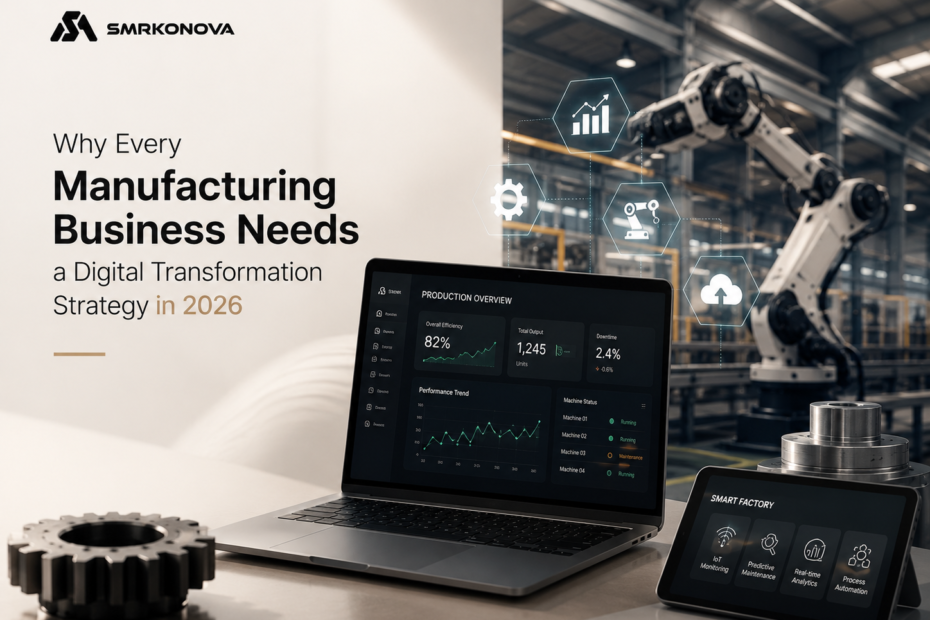
The manufacturing industry is changing at a pace that leaves little room for outdated systems or disconnected workflows. Rising customer expectations, supply chain pressure, labour challenges, and global competition are forcing manufacturers to rethink how they operate. In 2026, success will not come from technology alone—it will come from well-planned Digital Transformation Strategies that connect people, processes, and platforms into one efficient ecosystem.
For manufacturers, digital transformation is no longer a future goal. It is a practical business requirement. Companies that invest in the right systems today will be better prepared to improve productivity, reduce waste, respond faster to demand, and create stronger customer relationships tomorrow.
Manufacturing Is Becoming More Connected
Modern manufacturing businesses depend on far more than machines and production lines. They rely on data, automation, communication, and visibility across every department. From procurement and inventory management to production planning, sales enquiries, and after-sales support, every stage of the business performs better when it is digitally connected.
When systems are disconnected, teams often rely on spreadsheets, manual updates, and repeated communication. This slows down operations and increases the risk of errors, delays, and missed opportunities. Strong Digital Transformation Strategies help manufacturers replace fragmented processes with connected systems that improve accuracy and efficiency across the business.
Digital Transformation Goes Beyond Automation
Many businesses assume digital transformation simply means installing software or automating one part of the production line. In reality, it is much broader. It begins with understanding how every part of the business works together and identifying where technology can create measurable value.
A strong digital strategy for manufacturing may include:
- A modern manufacturing website that presents products, certifications, and capabilities clearly.
- ERP and CRM integrations that reduce duplicate data entry and improve team coordination.
- Customer enquiry systems that route leads directly to the right sales team.
- Analytics dashboards that provide real-time visibility into performance.
- AI-powered tools that support predictive maintenance, planning, and decision-making.
When these systems work together, manufacturers spend less time managing manual tasks and more time focusing on growth. That is the real value of Digital Transformation Strategies—they create a business that is more agile, more informed, and more competitive.
Your Website Is Part of Your Manufacturing Strategy
For many buyers, your website is the first interaction they have with your business. A slow, outdated, or confusing website can create doubt before a conversation even begins. In manufacturing, trust matters. Buyers want to see professionalism, technical capability, certifications, and proof that your business can deliver.
A well-designed manufacturing website should do more than display products. It should communicate expertise, simplify product discovery, generate qualified enquiries, and connect with your internal systems. It should also support your sales process by making it easier for prospects to understand what you offer and why they should choose you.
Learn how our Manufacturing Industry Solutions help manufacturers build stronger digital foundations, or explore our Custom Website Development services to create a website designed around your business goals.
Why Data-Driven Decisions Matter
Manufacturing leaders generate valuable data every day, but without the right systems, much of that information remains unused. Production data, sales trends, inventory levels, customer behaviour, and operational performance all contain insights that can improve decision-making.
By connecting these data points into a single digital ecosystem, businesses gain better visibility into operations. This leads to faster decisions, improved forecasting, reduced waste, and stronger operational control. Instead of reacting to problems after they happen, manufacturers can anticipate challenges and respond with confidence.
This is where Digital Transformation Strategies become especially powerful. They turn raw information into actionable insight, helping leaders make smarter decisions that support long-term growth.
The Competitive Advantage of Digital-First Manufacturers
Manufacturers that embrace digital transformation are not only improving internal operations—they are also improving the customer experience. Faster responses, better communication, more accurate information, and smoother enquiry handling all contribute to stronger relationships with clients and suppliers.
Digital-first manufacturers also benefit from lower operational costs, improved productivity, and greater scalability. As competition increases, digital maturity becomes a key differentiator. Businesses that invest in connected systems today will be better positioned to adapt to tomorrow’s market demands.
Build Systems That Grow With Your Business
At Smrkonova, we believe manufacturing businesses deserve more than standalone websites or isolated software tools. We build connected digital ecosystems where branding, websites, business applications, automation, and marketing work together to support long-term growth.
Whether you are modernising your digital presence, integrating business systems, or planning your next stage of expansion, our goal is simple: to help you build a manufacturing business that is ready for the future. With the right Digital Transformation Strategies, your business can operate more efficiently, communicate more clearly, and grow more confidently in 2026 and beyond.
Related Services:
- Manufacturing Industry Solutions
- Custom Website Development
- Business Automation
- SEO & Digital Marketing
- UI/UX Design